
Service
Energy Audit & OSE
MV2 data feeds the baseline and the prioritised improvement roadmap.
View service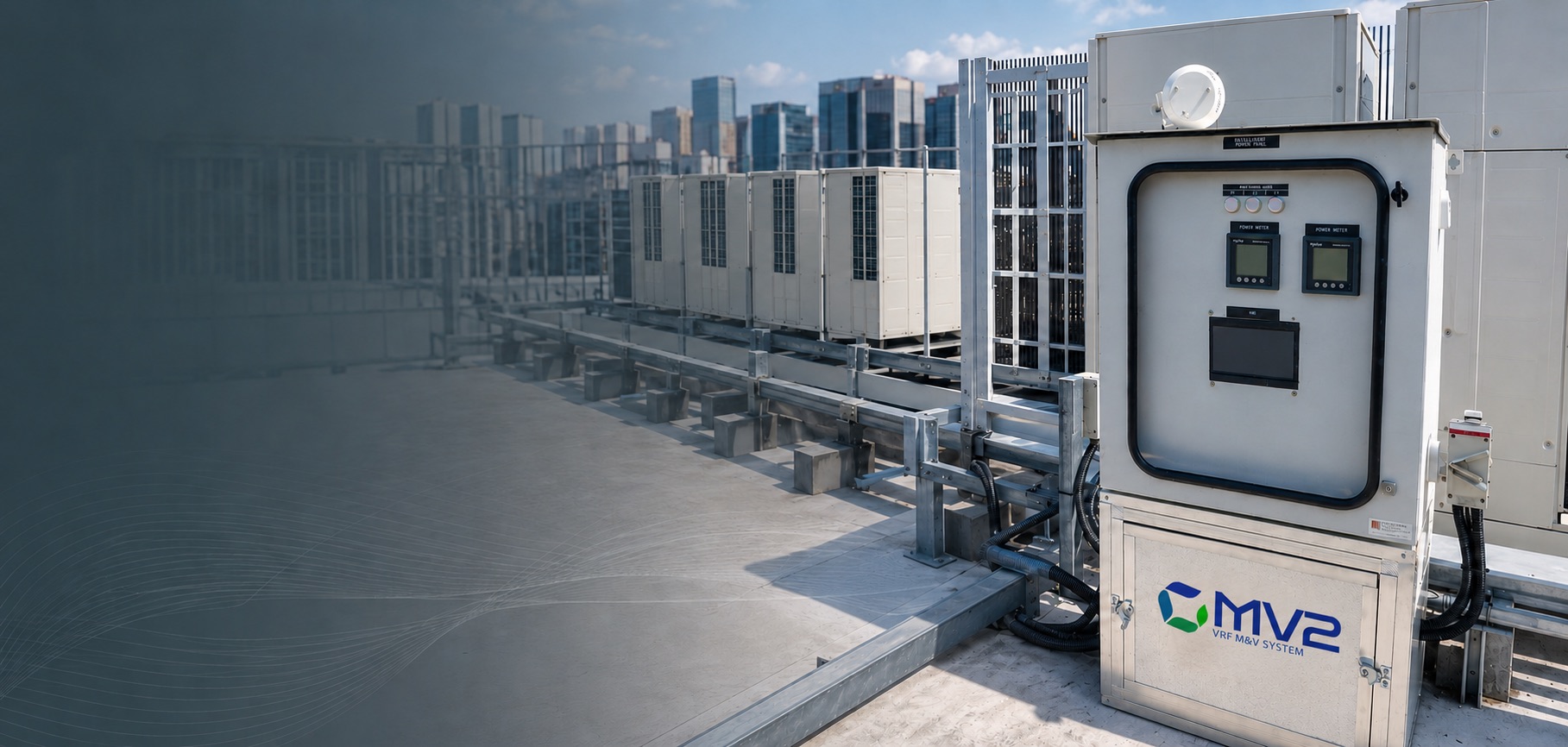

MV2 independently measures the real-time cooling capacity, power consumption and COP of VRF systems, providing reliable performance data under actual operating conditions.
MV2 measures the refrigerant and electrical parameters needed to determine the actual cooling performance of a VRF system.
Sensors installed around the outdoor unit collect refrigerant flow, temperature, pressure and electrical power data. MV2 processes these readings to calculate cooling capacity and COP continuously, providing a clear picture of system performance under actual operating conditions.
Temperature and pressure sensors measure the refrigerant conditions on both the liquid and gas sides of the VRF system.
A mass flow meter or non-intrusive ultrasonic flow meter measures the refrigerant flow required to determine cooling capacity.
The system records the power consumed by the compressor and condenser fans.
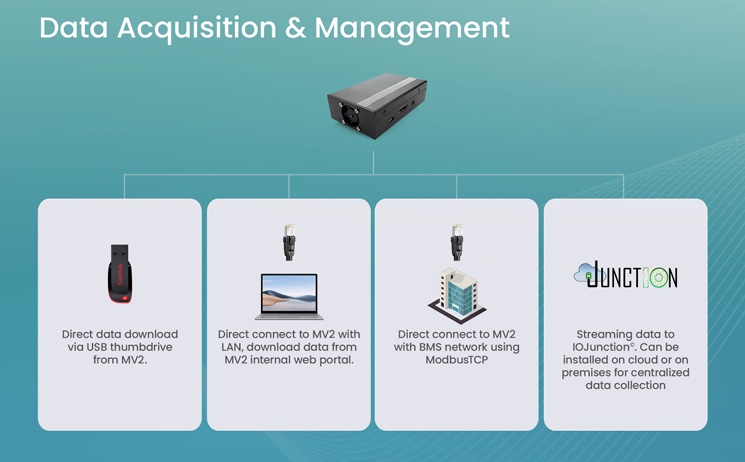
MV2 calculates cooling capacity, electrical consumption and COP in real time. The results can be viewed, downloaded or integrated with a Building Management System.
MV2 collects refrigerant and electrical measurements from the VRF system to calculate cooling capacity, power consumption and COP in real time. Select any photograph to open it at full size.
VRF performance is often assessed using manufacturer data or indirect calculations. MV2 measures the system under actual operating conditions, allowing performance issues and optimisation opportunities to be identified using real evidence.
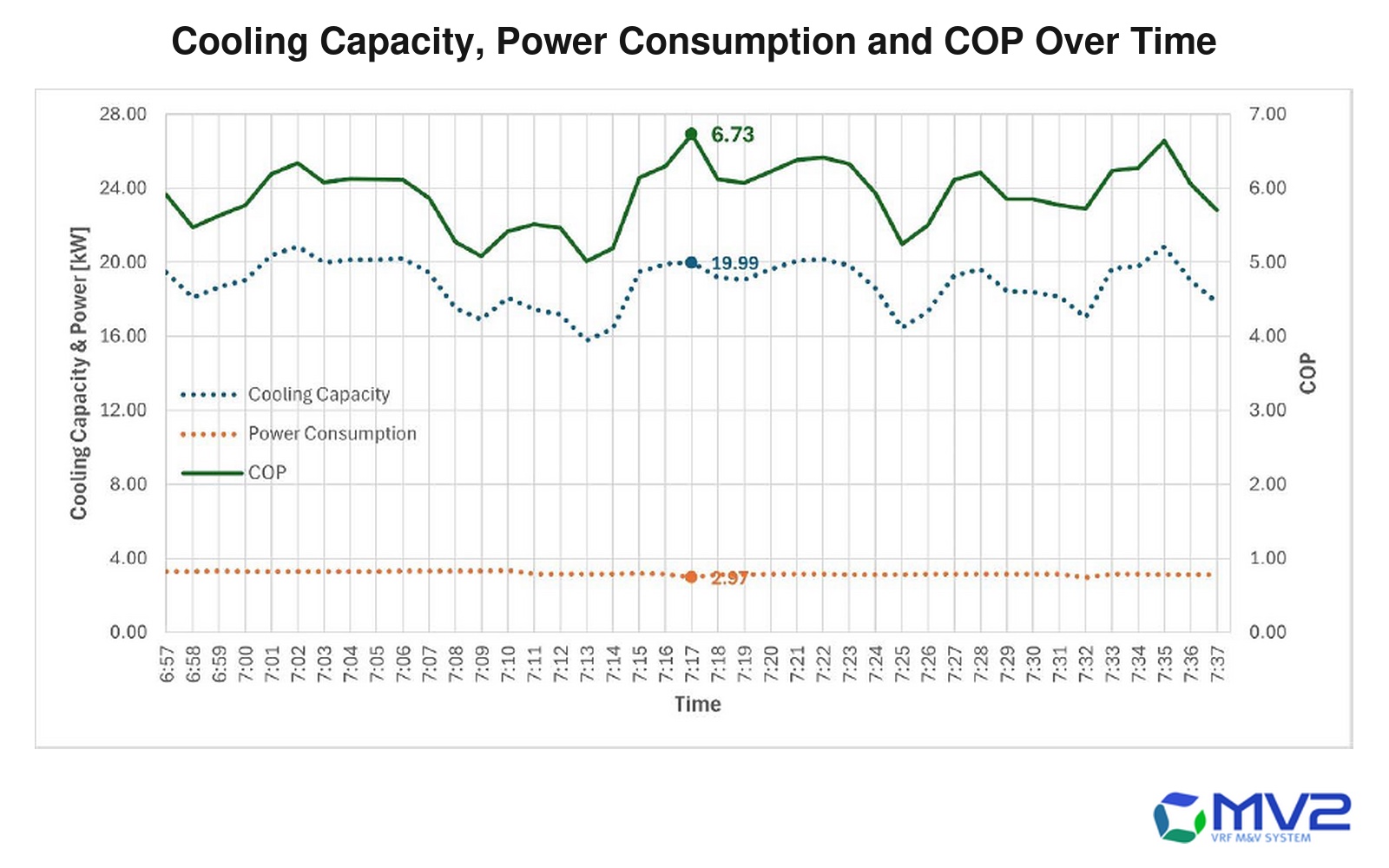
MV2 determines the actual cooling output of a VRF system using measured refrigerant enthalpy, refrigerant flow and electrical power.
The methodology is developed with reference to ISO 5151:2017, while the system’s measurement uncertainty has been independently verified by A*STAR’s National Metrology Centre.
MV2 is suitable wherever the actual operating performance of a VRF air-conditioning system needs to be measured, verified or improved.
Select any photograph to open it at full size.
MV2 data feeds the baseline and the prioritised improvement roadmap.
View serviceFind out what your VRF system is really doing.
Talk to us