
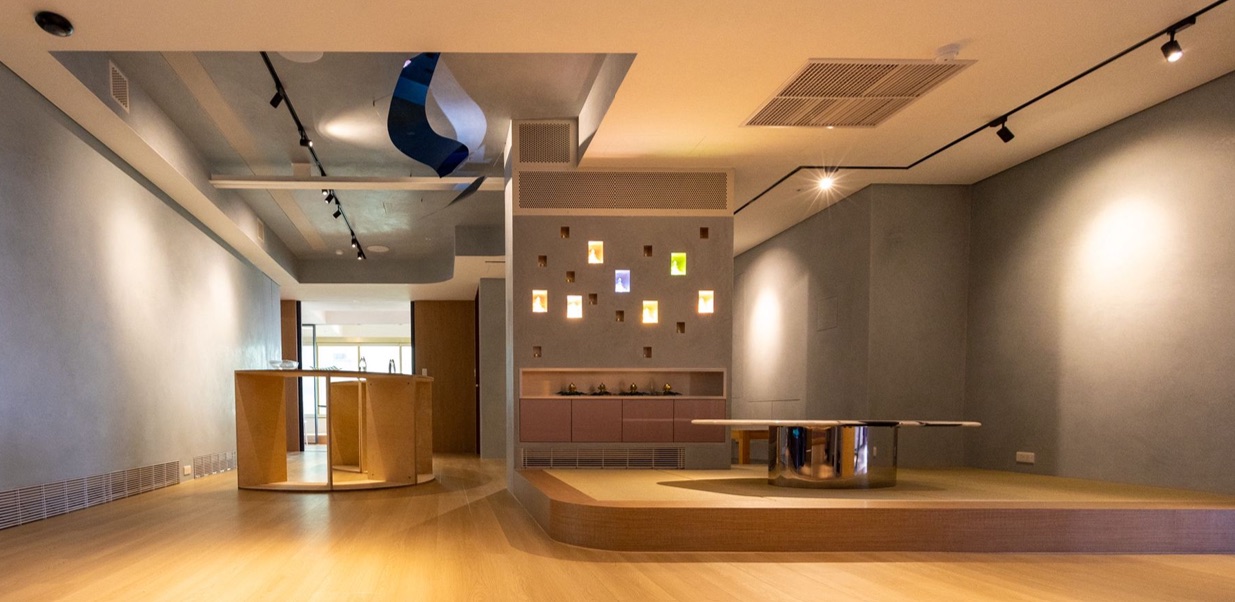

Twenty80 Passive Displacement Ventilation (PDV) system.
The Passive Displacement Cooling (PDC) coil uses chilled water to drive natural convection, delivering quiet, energy-efficient cooling without a motorised fan.
Displacement, without the fan.
Passive Displacement Cooling (PDC) operates similarly to conventional active displacement cooling. Cooled air is supplied at floor level, while warm air rises and is extracted at ceiling level. The key difference is that no mechanical fans are used in the process.
The Twenty80 PDC cooling system relies entirely on natural convection to deliver cooled air to the occupied zone.
To accommodate different design constraints and space requirements, three main models are available:
- Full-height PDC
- Half-height side-throw PDC
- Half-height down-throw PDC
Heat generated by occupants, lighting and equipment warms the room air. The warmer, lighter air rises and moves towards the PDV coil.
Chilled water flows through the coil and absorbs heat from the surrounding room air. As the air is cooled, it becomes denser.
The cooler, denser air descends through the insulated PDV casing and is discharged through the air grille.
The cool air moves gently across the floor and absorbs heat within the occupied zone. As it becomes warmer, it rises and returns towards the coil, and the natural-convection cycle continues.
The three model arrangements and the system schematic. Select any drawing to open it at full size.
Twenty80 PDV system benefits.
- Fan-free air delivery.
- Lower airside and total system energy.
- Lower overall maintenance.
- Quiet, draught-free comfort.
- Integrates easily into interior design.
- Green certification — Green Mark TSE for airside efficiency.
The Twenty80 PDV coil
The Twenty80 coil is YITAC's own design, supplied with an integrated drain pan and insulation. Given correct design and installation, condensation should not occur.
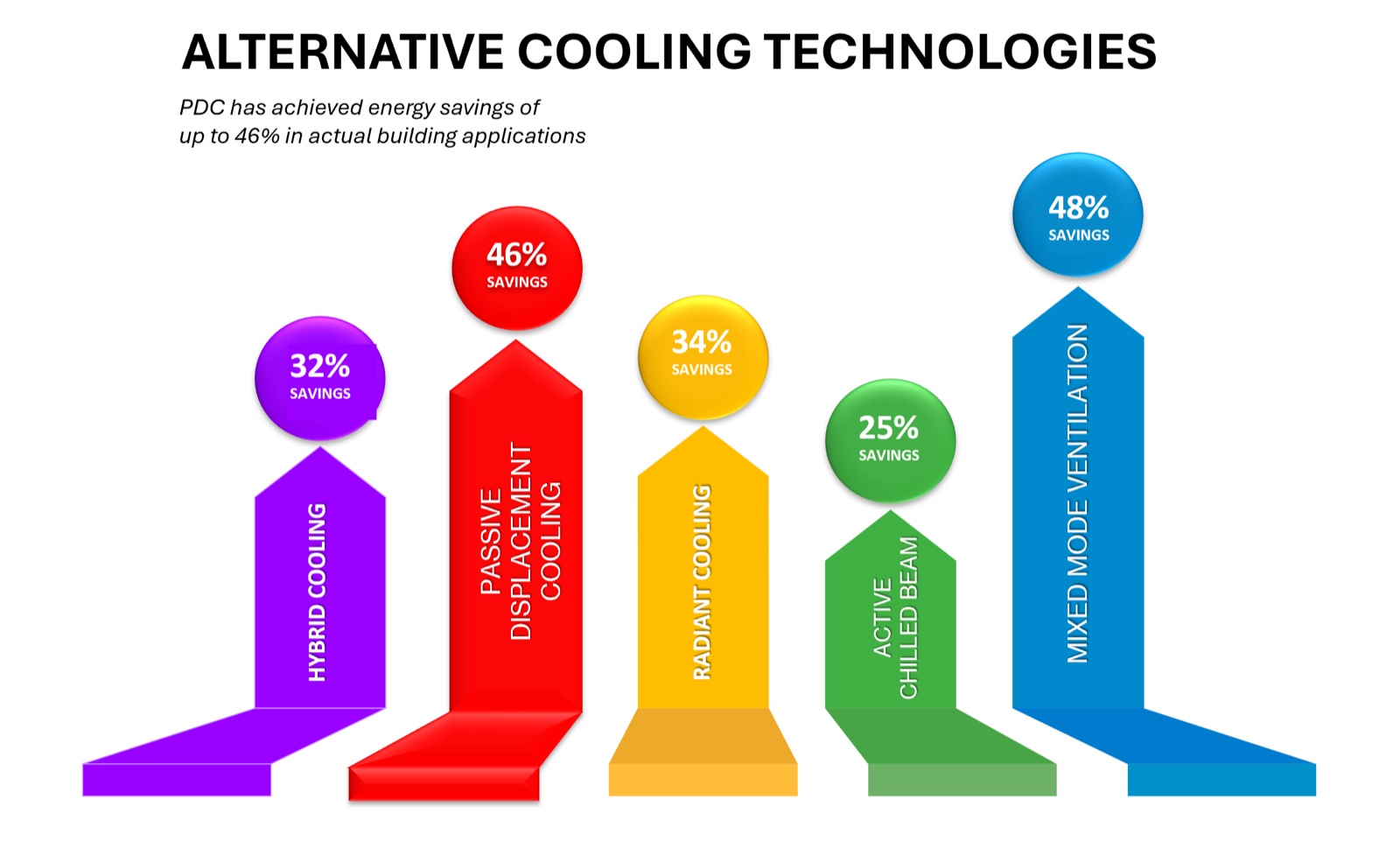
Where the saving actually comes from.
Conventional AHU- and FCU-based systems can consume approximately 0.2–0.25 kW/RT in airside fan power, accounting for 10%–20% of a building's total energy use.
By using natural convection, Twenty80 PDC reduces up to 90% of the airside energy required.
With no fan motors or filters to service or replace, maintenance costs can also be reduced by up to 80%.
- Coil function
- Sensible and latent cooling loads
- Air movement
- Natural convection
- Air discharge
- Low-level, low-velocity airflow
- Temperature control
- Zone thermostat
- Fresh-air provision
- Required
- Cooling medium
- Chilled water
- Condensate management
- Integrated insulated drain pan
- Green certification attributes
- SGBP, 3 ticks
Dimensions and full technical data are issued on enquiry rather than published. Request the data sheet.
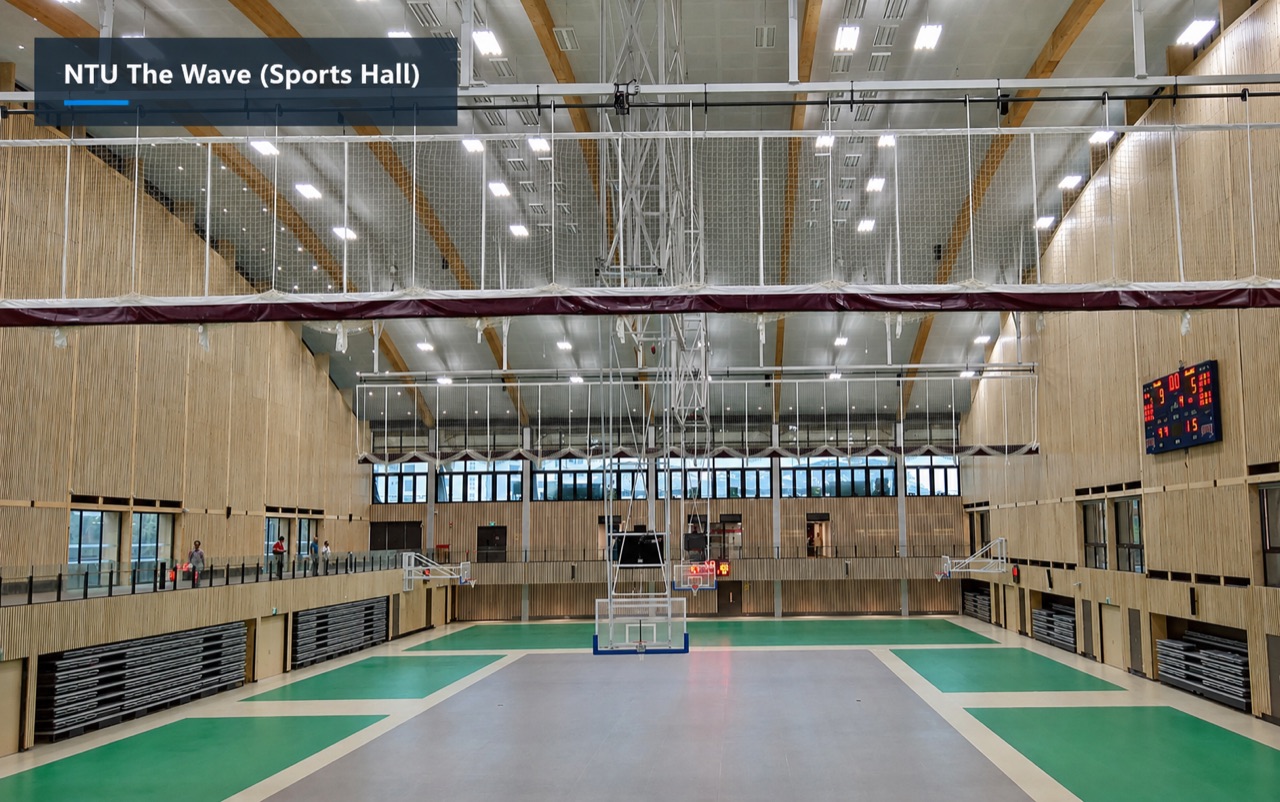
Where PDV is installed.
More than a decade of passive displacement work in Singapore, largely in education, institutional, office and sports facilities.
Education
- Nanyang Technological University (NTU)
- Singapore Institute of Technology (SIT) — Punggol
- Temasek Polytechnic
- INSEAD Asia Campus
- Dulwich College — The Greenhouse
- Institute of Technical Education (ITE)
Sports & recreation
- Kallang Tennis Hub
- The Shugart, Seagate — MPH and gym
- NTU The Wave
Offices & others
- Maritime and Port Authority (MPA)
- Heart of Yew Tee
- AbbVie — Biomedical Park
- Guoco Midtown @ Beach Road — chiller plant room
Installations in Singapore and across the region. Select any photograph to open it at full size.
Tell us the space and the load, and we will size the coils.
Talk to us