
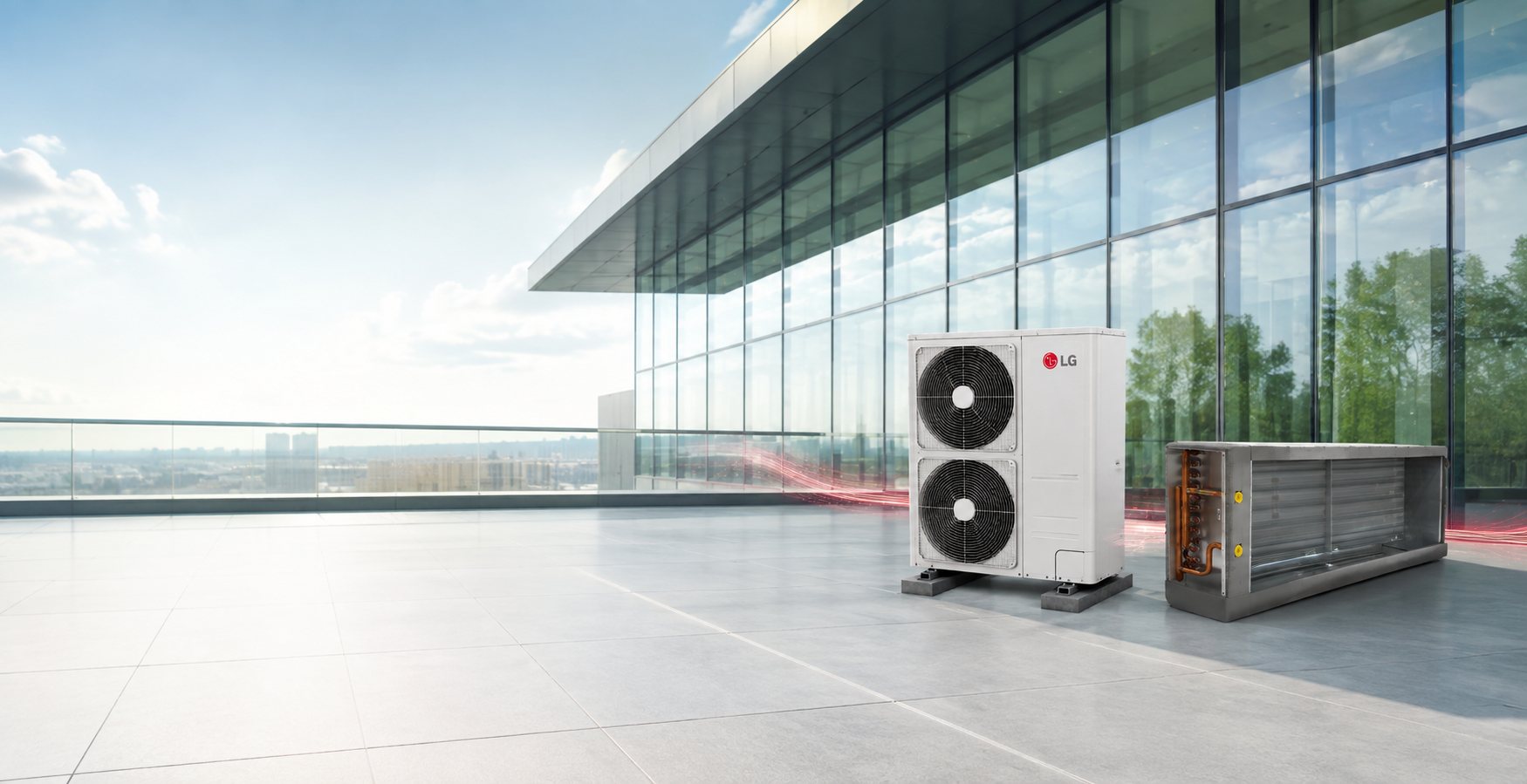

Twenty80 VRF-PDV system.
Twenty80 VRF-PDV combines direct-expansion VRF technology with passive displacement cooling, using natural convection to deliver quiet, energy-efficient and low-draught comfort.
Passive cooling, beyond chilled water.
Passive displacement ventilation supplies chilled air at floor level and lets natural convection carry it through the occupied zone. Removing the fan removes the ductwork, the plant room and the air-side energy that goes with them.
Twenty80 VRF-PDV was developed through a collaboration between YITAC and LG Electronics, pairing LG's VRF technology with YITAC's custom Twenty80 VRF-PDV coil.
Refrigerant flows directly from the VRF outdoor unit to each PDV coil, where natural convection delivers passive cooling.
Each coil uses an electronic expansion valve (EEV) and a wall thermostat for independent capacity and temperature control, while a central controller coordinates the overall system.
Heat from occupants, lighting and equipment warms the room air. The warmer, lighter air rises naturally towards the VRF coil located within the PDC unit.
Refrigerant flows through the VRF coil and absorbs heat from the surrounding room air. As the air is cooled, it becomes denser.
The cooler, denser air descends through the insulated PDV casing without the assistance of a motorised fan.
The cool air is discharged gently at low level and moves across the occupied zone. As it absorbs heat it rises back towards the PDC coil, and the natural-convection cycle continues.
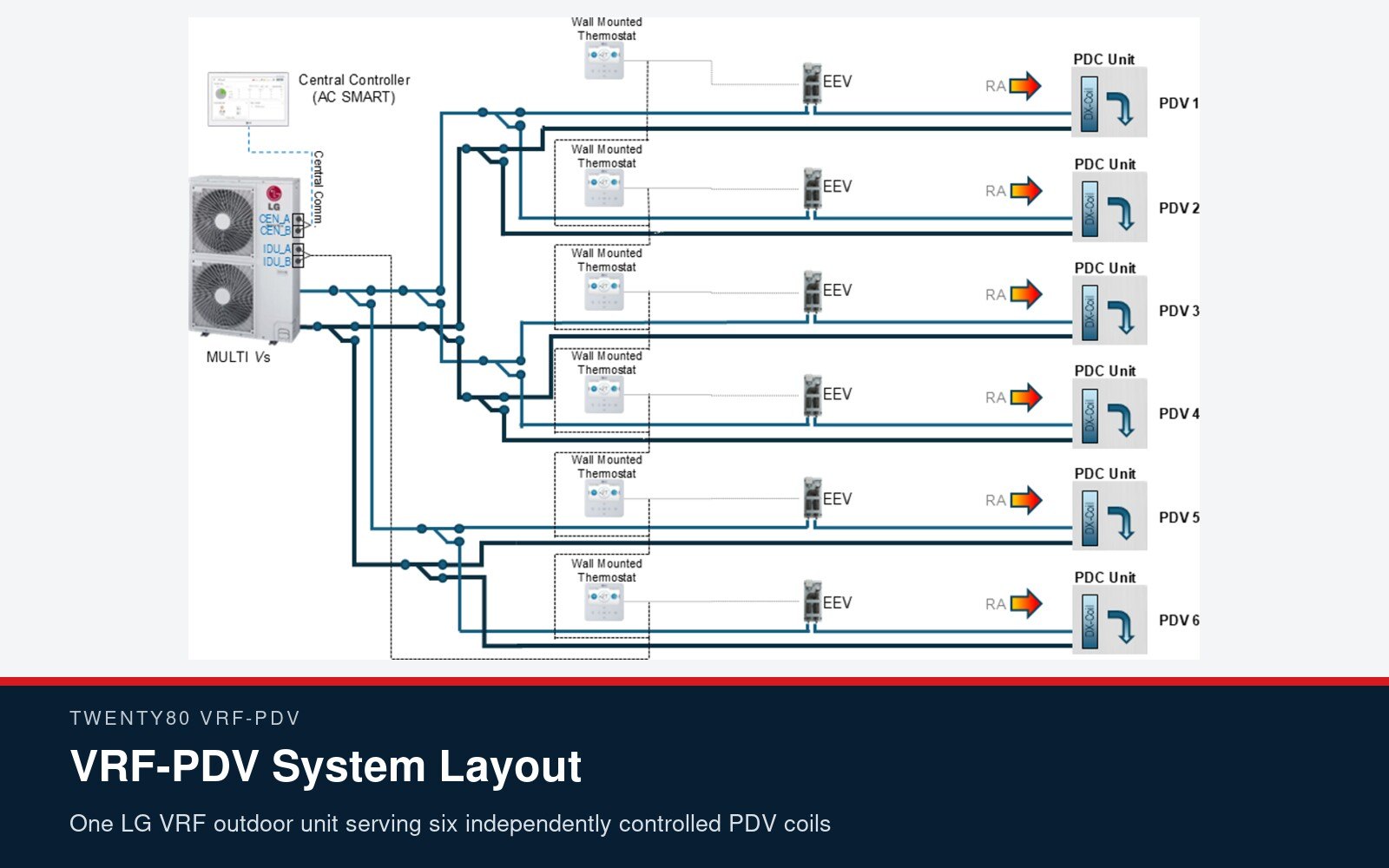
Inside the VRF-PDV testbed.
A closer look at the live, occupied testbed where Twenty80 VRF-PDV was installed, operated and verified using MV2.
Twenty80 VRF-PDV system benefits.
- Fan-free air delivery.
- Lower air-side and total system energy.
- Lower overall maintenance.
- Quiet, draught-free comfort.
- Integrates easily into interior design.
- Designed without a chiller room, cooling tower or chilled-water risers.
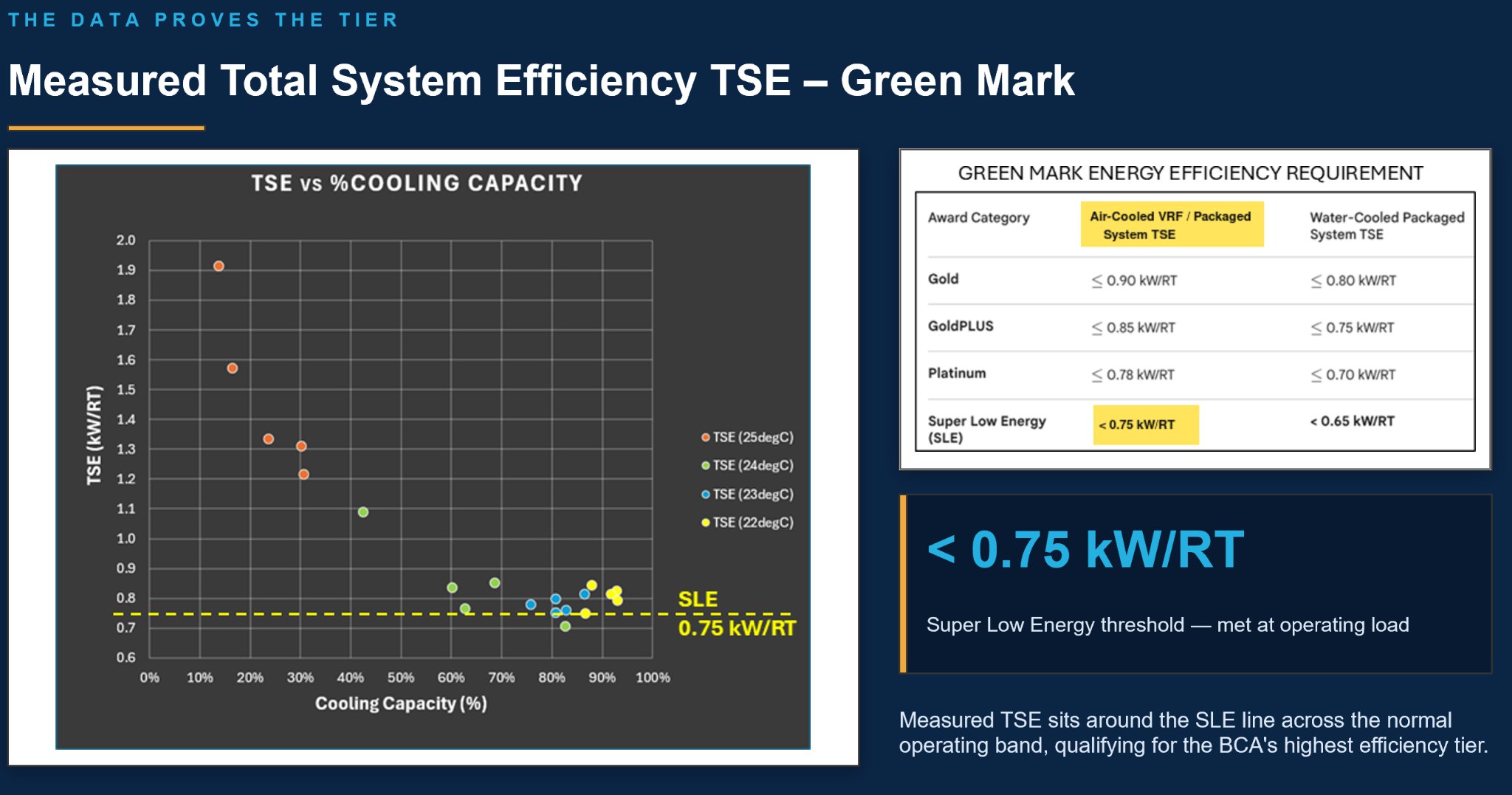
- Green certification — Green Mark TSE for air-side efficiency.
Efficiency proven under actual operating conditions.
The VRF-PDV system was monitored using MV2 in a live, occupied office testbed at Ngee Ann Polytechnic. Real-time measurements recorded a TSE below 0.75 kW/RT at normal operating loads, meeting the Green Mark Super Low Energy threshold while maintaining indoor comfort.
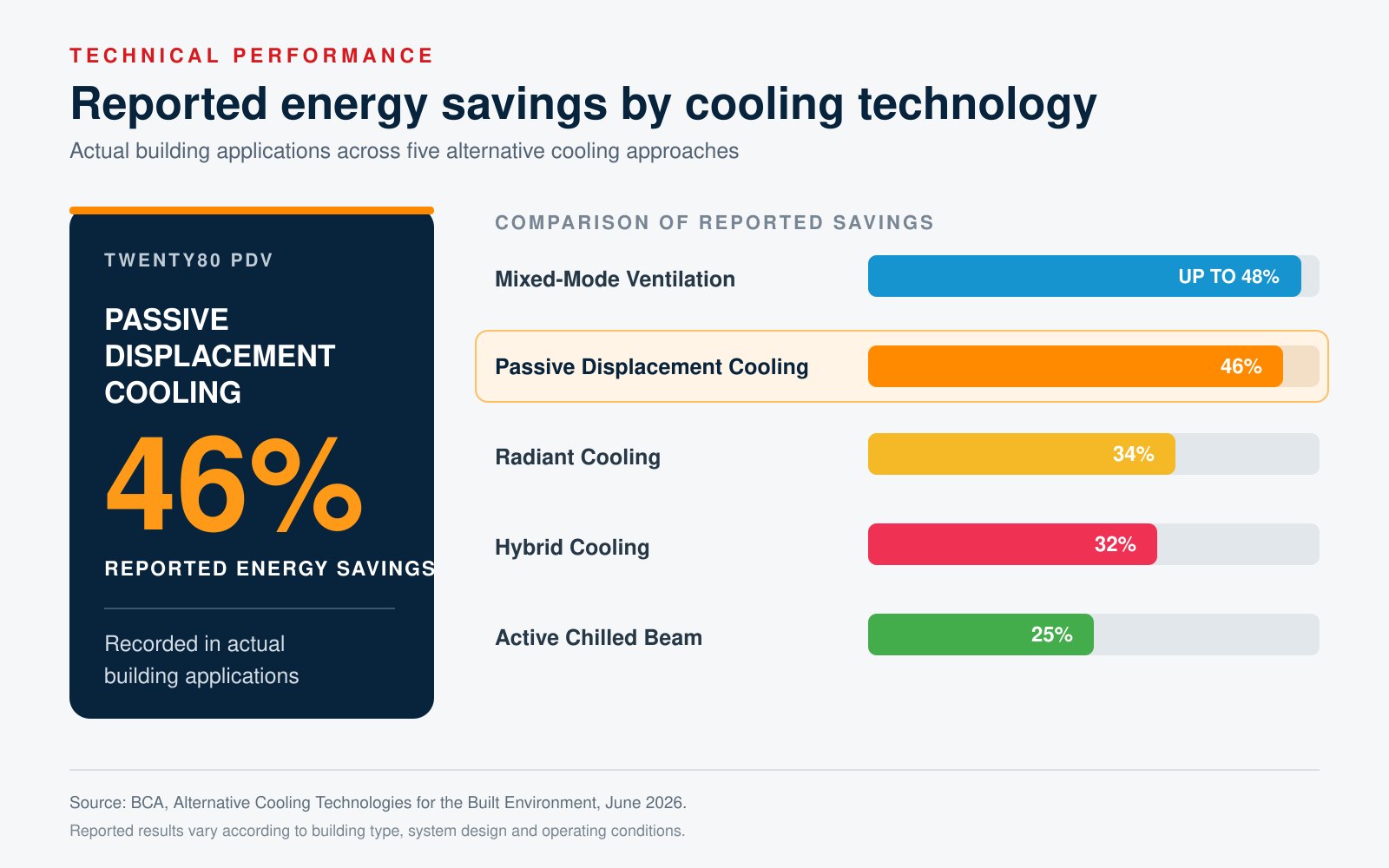
Where the saving actually comes from.
Conventional VRF indoor units rely on motorised fans to circulate cooled air. Twenty80 VRF-PDV removes the indoor fan power by using natural convection, while the VRF system modulates refrigerant flow to match the cooling demand of each zone.
The direct refrigerant connection also removes the need for a central chilled-water plant and its associated cooling towers, pumps, pipework and plant-room space.
Routine maintenance is significantly reduced compared with conventional VRF indoor units, and is mainly limited to periodic inspection of the coil, condensate drainage, EEV and controls.
Testbed performance
The VRF-PDV system was tested in a live, occupied office at Ngee Ann Polytechnic. Using MV2, actual cooling capacity, COP, TSE and energy consumption were measured in real time.
The system achieved a COP of approximately 5, a TSE below 0.75 kW/RT, and 53% lower weekly energy consumption at 25°C compared with 22°C, while maintaining comfort within the ASHRAE 55 comfort band.
- System
- VRF with PDC coil
- Coil function
- Sensible and latent cooling loads
- Cooling medium
- Direct-expansion refrigerant
- Air movement
- Natural convection
- Temperature control
- Zone thermostat
- Fresh-air provision
- Required
- Condensate management
- Integrated insulated drain pan
- Verification
- Real-time MV2 measurement
Dimensions and full technical data are issued on enquiry rather than published. Request the data sheet.
Where VRF-PDV works best.
Twenty80 VRF-PDV suits spaces that need quiet, low-draught comfort — particularly where cost, architectural design, plant-room space or building-services constraints make a chilled-water system impractical.
Education
- Schools and educational institutions
- Classrooms and training rooms
- Lecture halls and auditoriums
- Campus buildings without central chilled water
Sports & recreational
- Indoor sports halls
- Badminton courts
- Gymnasiums
- Air-current-sensitive sporting spaces
Offices & others
- Offices and workplaces
- Smaller standalone buildings
- Libraries
- Recording studios, broadcast and production rooms
- Acoustically sensitive facilities
The space types Twenty80 VRF-PDV is designed for. Select any photograph to open it at full size.
Tell us the space and the load, and we will size the coils.
Talk to us